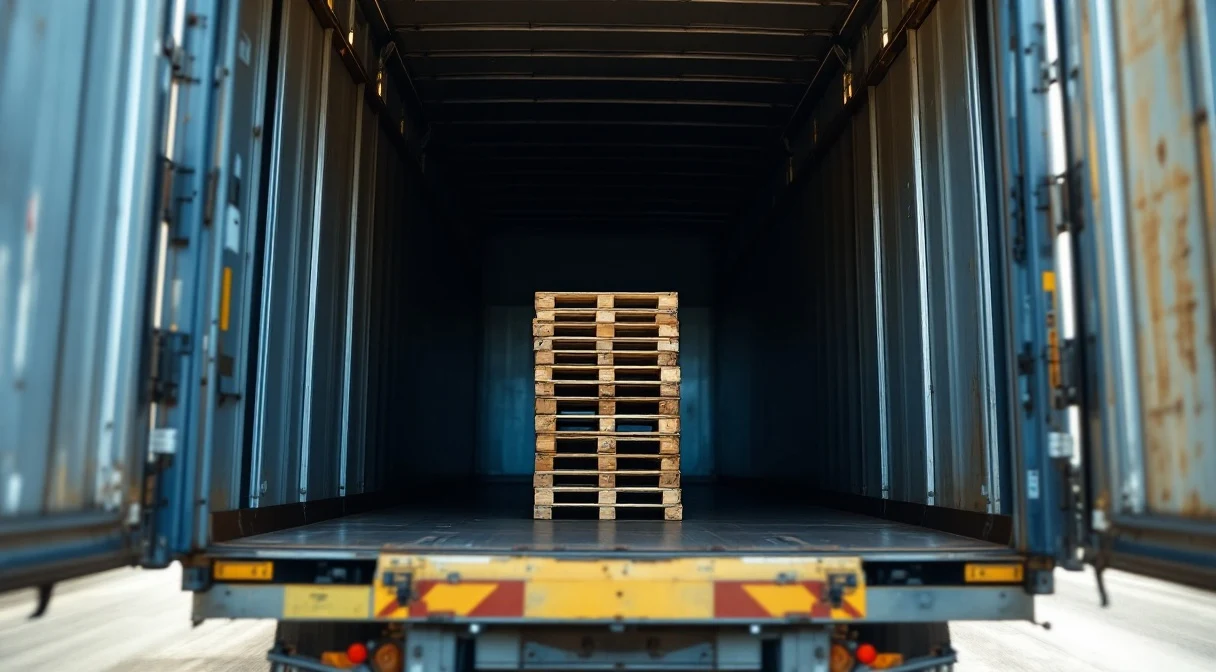
“82% load” feels reassuring. But it means 18% missed opportunity. Every trip could’ve taken 3-5 more pallets.
The reason is structural: the driver says “fully loaded”; real load isn’t measured without CMR + pallet count + volume. The ops centre books the trip as “full”.
Triple measurement
Lognari combines CMR + pallet count + volume (m³) per trip:
| Trip | CMR tonnage | Pallets | Volume m³ | Load % |
|---|---|---|---|---|
| TR→AT food | 18 t / 18 t | 32 / 33 | 65 / 70 | 93% (good) |
| TR→DE electronics | 12 t / 18 t | 24 / 33 | 48 / 70 | 67% (loose) |
| TR→PL express | 14 t / 18 t | 28 / 33 | 55 / 70 | 78% (med) |
Empty capacity accumulates by lane. 15%+ empty + matching time window → partial-load matching triggers.
Impact by fleet size
| Fleet | Empty 18%→10% | Monthly extra revenue |
|---|---|---|
| 100 trucks | +8% trip revenue | €18,000+/mo |
| 300 trucks | +8% trip revenue | €54,000/mo |
| 1,000 trucks | +8% trip revenue | €180K+/mo + CO₂ report |
Pilot — 95-truck TR→EU export fleet
At pilot start: 82% average load. Over 6 months:
- CMR + pallet/volume cross-check automated
- Partial-load matching turned on (TimoCom + Trans.eu)
- 15% driver share bonus
Result:
- Load 82% → 91%
- Average €11,300/month extra revenue (95-truck fleet)
- 6-month cumulative: €67,800 extra revenue
Side effect: customer contract argument
High load = low CO₂ per ton-km. The figure feeds into customers’ supplier-selection criteria and Scope 3 emissions reports. One pilot fleet won a 2-year framework agreement on this basis.
What’s next
If your fleet runs under 85% average load and partial-load matching isn’t automated, the figures in this article are about you.
Reach out via the contact section — reply within one business day.