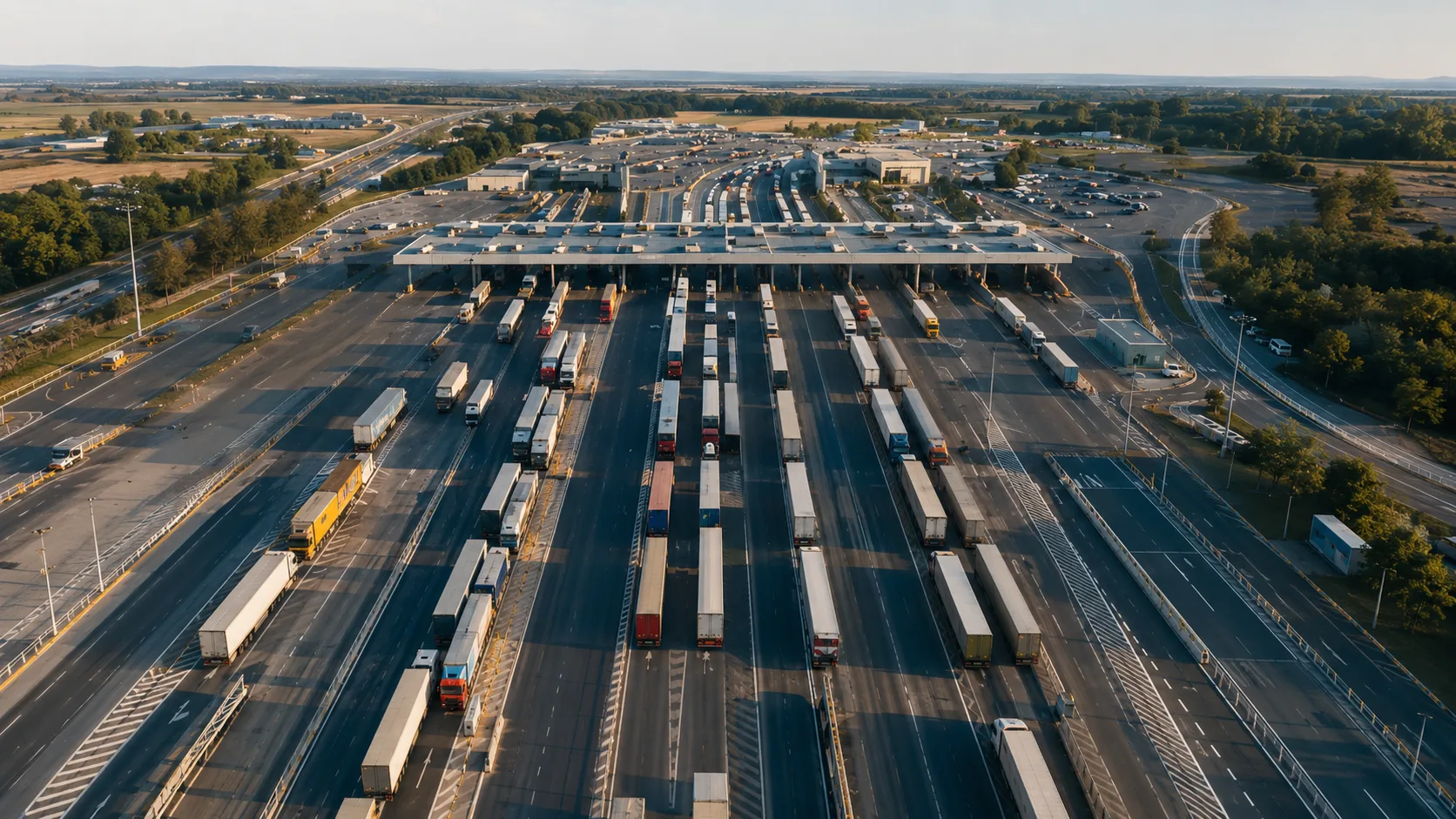
Eurasian logistics command center

Loss intelligence in your fleetTranslate to financial impact.

Lognari integrates telematics, TMS, ERP, fuel card, tachograph, and driver data to display fuel, wait time, route, compliance, and revenue leakages on a single command center screen.

Make idle loss visible
  • Fuel deviation

    −12%

    anomaly signal

  • Border wait

    82 min

    operational impact

  • AETR risk

    23 drivers

    compliance alert

  • Decision intelligence over ERP
  • Driver portal
  • Fuel · Route · Border · AETR
  • Route and Document Flows
SAMPLE SCENARIO
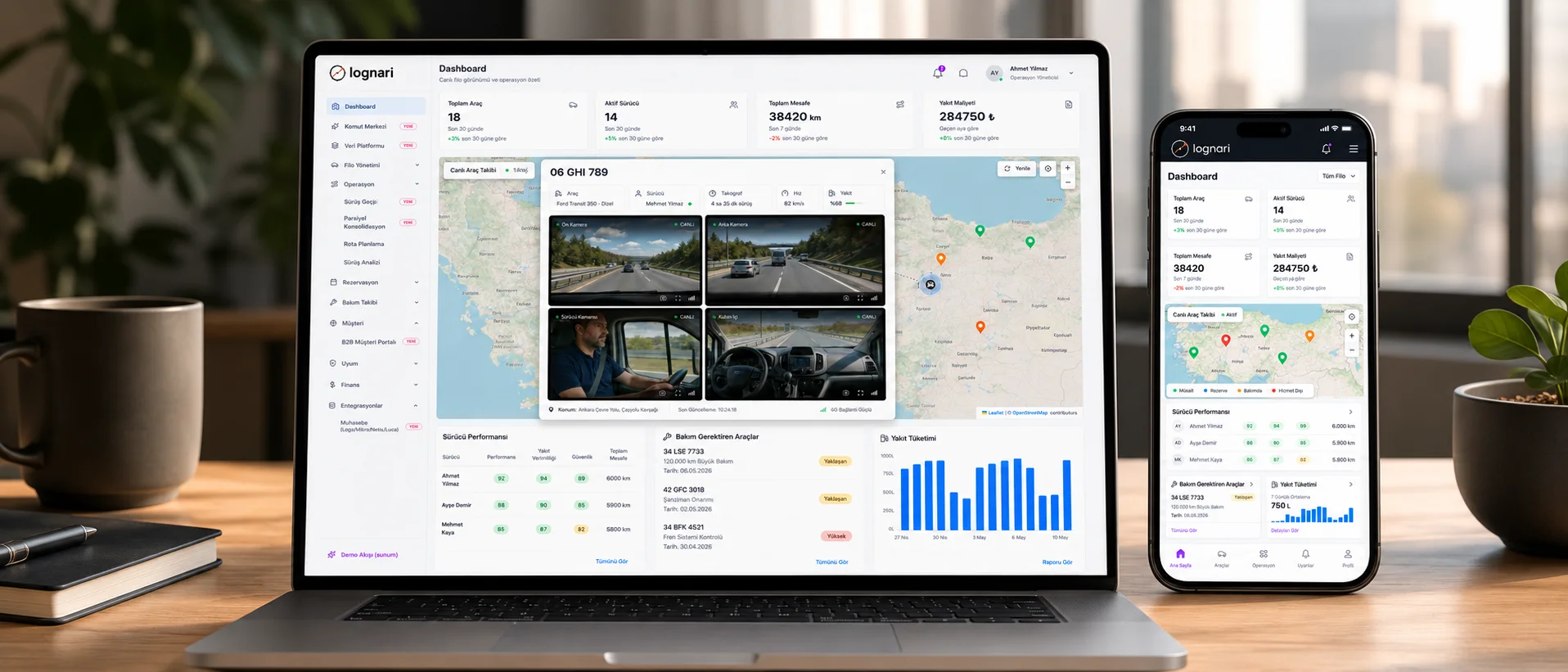
Lognari panel on a desktop and a phone in an office — real operations view.
Operations Reality

Operating a fleet means manually performing one of these tasks every day.

International transport reads data from over 15 different systems. If it leaves the integration to you, loss is inevitable. Lognari transforms this chaos into a single operations intelligence.

Five sources, five screens — Lognari streams them into a single panel and puts the call in front of you.

  • Tachograph elsewhere
  • Fuel receipts elsewhere
  • GPS elsewhere
  • Accounting elsewhere
  • Border data elsewhere

AETR violation risk

One panel, one language, one decision.

Last 8 weeks · drivers at AETR risk ▲ +23% vs last week
28 drivers
  • Mehmet Yılmaz 82%
  • Ali Demir 61%
  • İbrahim Kaya 48%
  • 47 Vehicle sources
  • 2M Telemetry
  • +18% Margin
01 AETR risk tracked by eye A single bad tachograph record means thousands of € at the border. 02 Comparing fuel receipts in Excel Phantom pumps, on-site sales, hidden tanks — none of it surfaces by hand. 03 Hours of queue at Kapıkule The next gate, 80 km away, is at 1 hour — but no one knows in real time. 04 Vehicles returning empty 18-ton capacity, 12 tons loaded — the remaining 6 tons are pure loss. 01 AETR risk tracked by eye A single bad tachograph record means thousands of € at the border. 02 Comparing fuel receipts in Excel Phantom pumps, on-site sales, hidden tanks — none of it surfaces by hand. 03 Hours of queue at Kapıkule The next gate, 80 km away, is at 1 hour — but no one knows in real time. 04 Vehicles returning empty 18-ton capacity, 12 tons loaded — the remaining 6 tons are pure loss.
Decision layer above ERP

Not a new ERP. A decision layer on top of yours.

Lognari plugs into your existing TMS, ERP, fuel cards, telematics, Excel and finance systems. Without moving data, breaking workflows or unsettling habits — it turns them into a decision screen.

  • 01

    Plugs into existing systems

    Reads from ERP, TMS, fuel cards, fleet tracking, accounting and Excel sources.

  • 02

    Does not disrupt operations

    Not a system migration; adds a visibility and decision layer on top of the existing flow.

  • 03

    Role-based visibility

    CEO, ops, finance and field teams each see their own decision screen from the same data.

  • 04

    Auditable data flow

    Source, time, user and change trails build a trustworthy decision foundation.

Ask. See. Act.

Stop staring at the ERP.Ask in plain language.

Speak the language of the field; Lognari presents you with answers, anomalies, and action recommendations derived from 47 integrated sources.

  1. 01

    Ask

    “Which vehicle is losing money?” — write in field language, no SQL.

  2. 02

    See

    Cernari pulls the answer and the anomaly from Gold tables built on 47 sources.

  3. 03

    Act

    The decision is still yours — Lognari puts the recommendation, the number and the € in front of you.

  • Which drivers are at AETR risk?
  • Who are the drivers with the most hard braking incidents in the last 30 days?
  • Show drivers with expiring licenses or certificates.
  • List drivers with fuel anomalies.
  • Which drivers had declining performance scores this week?
  • Why have border wait times increased on the Germany route?
  • Risk 3 drivers at high AETR risk · Mehmet · Ali · İbrahim. Detail
  • Driving 5 drivers with rising harsh-brake score · top: M. Yılmaz (12 events). Detail
  • Compliance 2 licenses expire in 30 days; 1 ADR certificate ending. Detail
  • Opportunity Fuel anomaly: 2 drivers +11% deviation · 06 DEF 456 + 34 LG 812. Detail
  • Profitability 4 drivers had a performance drop this week · avg −8%. Detail
  • Border delay Germany route wait +18% · Kapıkule busy · Hamzabeyli −83 min. Detail
Lognari Border

Manage your border crossings with intelligence.

Analyzes wait times at Kapıkule and every border gate in real time, recommends the fastest gate, and optimizes your route in hours and €.

Operational Intelligence Engine

Your data is already with you. Lognari turns it into decisions.

Cernari is Lognari's AI copilot — the decision engine that transforms questions into answers and signals into actions. It converts data sitting in your ERP, Excel, fuel cards, and operations into route, risk, margin, and action priorities. Cernari connects to your existing data model — Microsoft Fabric, Snowflake, Databricks, or BigQuery.

  • Ask
  • See
  • Act
  • Remember
  • Govern

↳ Ask from Teams · WhatsApp · Web · self-hosted · GDPR & KVKK ready

  • 4 Warehouse backends · Fabric / Snowflake / Databricks / BigQuery
  • 47 Active data sources
  • 2M+ Telemetry rows / day
  • 99.8% Pipeline uptime · with source + last-update citations

The Cernari family · 6 sector intelligence verticals

Same engine, different industry languages. Each vertical ships its own operations pipeline, loss atlas and decision UI.

  • Live Lognari

    Logistics Intelligence

  • Preview Netnari

    Telecom & Network Operations Intelligence

  • Preview Skolnari

    Global Education Intelligence

  • Preview Shiftnari

    Staffing & Housing Intelligence

  • Preview Fieldnari

    Field Force & Pharma Commercial Intelligence

  • Preview Civicnari

    NGO & Association Intelligence

Lognari Fuel

Fuel data is not just expense tracking.

Lognari combines fuel entries, expense records, route context, contracted stations, and pricing sources along the route to generate more accurate fuel decisions for drivers and operations teams. At points with live data feeds, real-time prices are shown; at other locations, the last known price and confidence level are displayed. By comparing OBD2 sensor data against receipts/OCR, it surfaces anomalies such as off-route fuel purchases, phantom pumping, and field sales.

Load visibility

Trailer fullness: visibility from documents, tonnage and capacity data.

Lognari surfaces capacity utilisation from partial consolidation, tonnage, pallet/volume data and operations records. Where sensor or weighbridge integration exists, this layer can be extended with live weight data.

  • 18.4 t Load tonnage
  • 82% Capacity utilisation
  • −1.2 t CO₂ saving (monthly)
  • 6 routes Consolidation opportunity

Source: CMR + dispatch notes + pallet/volume data + partial consolidation. Extensible with sensor/weighbridge integration.

CFO view

Every trip is a cost center. Every vehicle is a P&L line.

Lognari extracts revenue–cost breakdowns by vehicle, route, customer and trip. Fuel, empty km, idle, gate and operational deviations become a financial impact.

  • €12,700 Visible empty-km cost this month
  • 8.4% Route-based fuel deviation
  • 17 trips Operations with margin risk

Per-vehicle P&L · last 7 days SAMPLE SCENARIO

Vehicle Route Revenue Cost Margin Risk
34 LG 812 Istanbul–Munich €4,800 €4,210 12.3% Fuel deviation
34 LG 447 Bursa–Rotterdam €5,200 €5,050 2.9% Idle cost
06 LN 221 Izmir–Vienna €4,100 €3,620 11.7% Normal
41 TR 090 Konya–Prague €3,900 €4,050 −3.8% Loss

DE-TR queue time +18% in 14 days · 34 LG 812 burns 11% above fleet average · 2 vehicles will hit AETR risk in 6 hours.

Lognari Compliance

See AETR risk before the border, not at it.

Monitor driver hours, break requirements, and AETR violation risks in real-time from tachograph records. Receive alerts without delay.

Driver risk status SAMPLE SCENARIO

  • Mehmet Yılmaz High %82
  • Ali Demir Medium %61
  • İbrahim Kaya Medium %48
  • Murat Şahin Low %18
  • Hasan Çelik Low %12

Weekly driving hours

MonTueWedThuFriSatSun
Drive (h) 9.19.38.69.48.22.10.0
Rest (h) 1.21.41.51.11.50.50.0
Risk
Field execution layer

The command center starts in the office and continues in the driver's pocket.

The driver isn't alone on the road.

Lognari connects the operational decisions a manager sees to the driver's field task flow: trip guide, document check, fuel suggestion, AETR alert, incident reporting and performance tracking.

  1. 01 Trip assigned
  2. 02 Documents are checked
  3. 03 Route + fuel plan visible
  4. 04 AETR / border alerts arrive
  5. 05 Proof of delivery completed
  6. 06 Incidents flow back to ops
Sefer Rehberi Trip #B7421 · 34 LG 812 · Istanbul → Nuremberg · 2,236 km
  1. Trip summary Customer: ABC Automotive · ETA 18.05 09:30 · Gate: 4
  2. Required documents CMR, T1, invoice, seal · T1 not yet verified
  3. Route plan Edirne → Kapıkule → Sofia → Belgrade → Munich → Nuremberg
  4. Fuel plan Recommended fuel before BG exit: 520 L · contracted: Shell Sofia East
  5. AETR / rest plan 3 h 20 min until mandatory rest · Edirne rest area
  6. Border gate status Kapıkule queue risk high · Hamzabeyli alternative −83 min

Driver intelligence capabilities

  • Driver 360 profile

    License, region, vehicle history, incidents and trainings all in one profile.

  • Driving behaviour analysis

    Harsh braking, speed violations, idle and distraction roll up into a risk score.

  • Driver Portal

    The driver tracks trips, fuel, maintenance reports and performance from their own screen.

  • Document & certificate tracking

    Missing or soon-to-expire documents surface to ops automatically.

  • Incident reporting

    Damage, delay, inspection and fuel issues report through one flow.

  • New-driver guide

    A new driver sees which step to complete next, in the field.

Step-by-step field guide for new drivers.

Training, certificate and document tracking joins trip-based task flows so a new driver sees which documents to check, which route to follow, which alerts to watch, and which step to complete next.

  1. 01 License & document check
  2. 02 Vehicle & trailer verification
  3. 03 Route briefing
  4. 04 Fuel policy
  5. 05 AETR / rest plan
  6. 06 Customer site instructions
  7. 07 Proof of delivery
  8. 08 Incident reporting
Tenant architecture

Every company can configure its own operations space.

Lognari's tenant architecture is designed to support per-company subdomain, brand colour, vehicle count, licensing model and role-based usage scenarios. For large fleets, the UI can be configured by department, region and user role.

  • Per-company subdomain
  • Brand colour
  • Role-based screens
  • Region / department separation
  • Vehicle-count licensing
  • Customer & driver portals

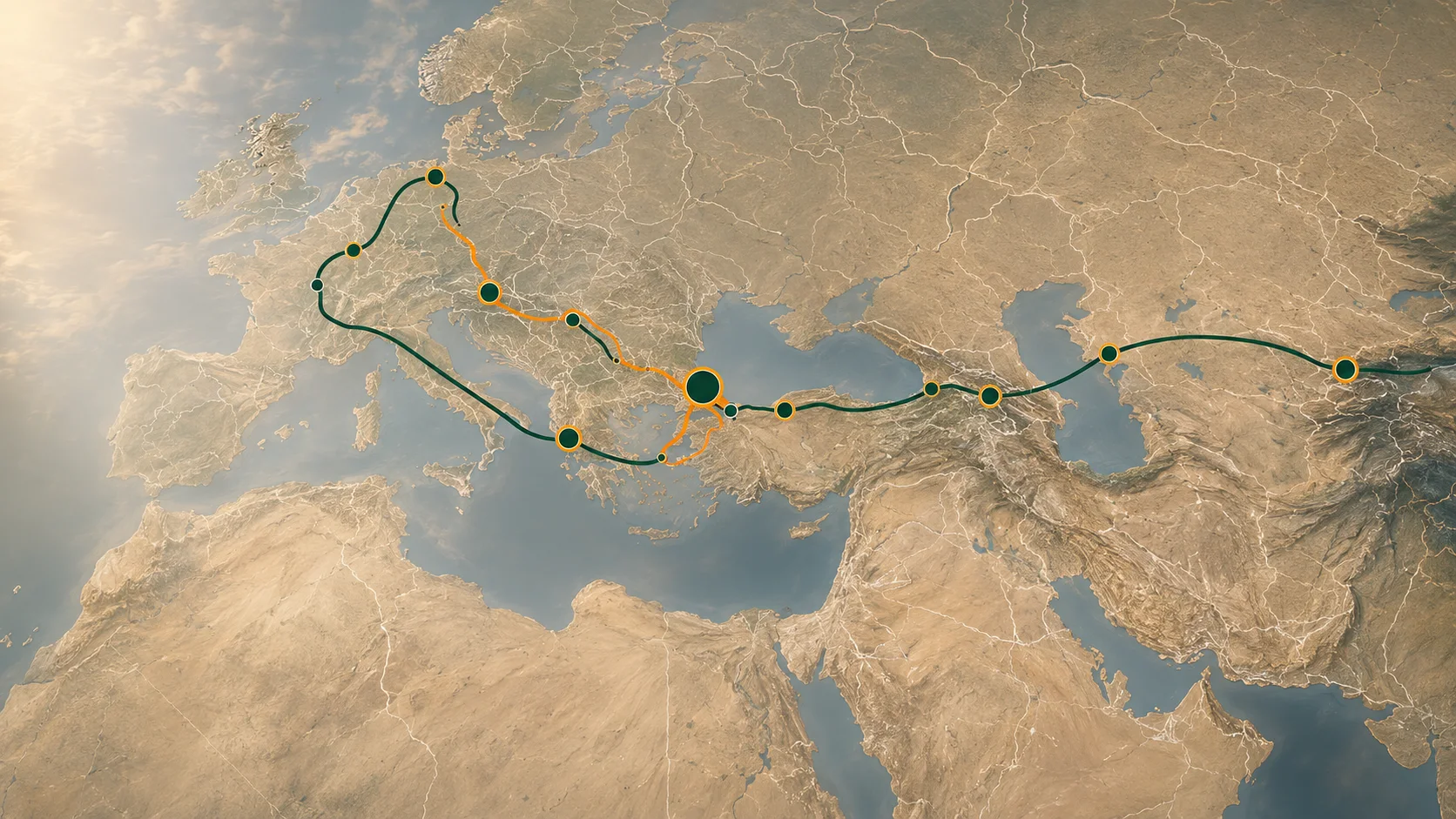
Türkiye–Europe–Middle East corridor

Manage the loss, not the corridor.

Lognari unifies trip, wait, fuel and margin signals across the Türkiye–Europe–Middle East corridor inside a single operational decision layer.

Detailed product architecture and the live demo flow are shared in qualified investor and pilot conversations.

Market footprint

Operational footprint of the Eurasia corridor.

Border–wait risk and fleet loss potential on the Türkiye–Europe route form a measurable picture inside Lognari's pilot corridor scope.

  • 14+ Border nodes
  • 28 Country coverage
  • 65K+ Monthly drive hours

Türkiye–Europe route · border/wait risk · fleet loss potential — tracked across the Eurasia pilot corridor.

Why now

In European logistics, margins are shrinking and losses are growing invisibly.

In European logistics, margins are shrinking, border crossings are stretching, and fuel and empty-km costs are growing invisibly. Lognari brings fragmented operations data into a single command layer — enterprise-grade decision intelligence for mid-sized logistics firms.

  • 01

    Shrinking margins

    Fuel, gate, idle and personnel costs rise; spotting unprofitable trips late hits the company directly.

  • 02

    Fragmented data

    ERP, fleet tracking, fuel cards, Excel and WhatsApp get read separately for decisions — the whole picture is lost.

  • 03

    Corridor risk

    Border, AETR, route and idle risks are a natural part of operations on the Türkiye–Europe–Central Asia corridor.

  • 04

    AI expectation

    Executives no longer expect reports — they expect answers and action priorities, directly.

IT, security & integration

It does not work against your IT team. It works with them.

Lognari does not replace your existing infrastructure. It runs as an API-first, role-based and auditable decision layer.

  • Architecture

    • API-first connector layer
    • ERP / TMS / fuel card / telematics integration
    • Read-only data mode option
    • Cloud or private deployment
  • Security & governance

    • Role-based access control (RBAC)
    • Full audit log · source + user + time
    • GDPR & KVKK ready architecture
    • Multi-company / multi-tenant support

Loss-Point Engine

Fleet losses don't occur in isolation—they form chains.

Lognari unifies vehicle, trip, driver, fuel, ERP, tachograph and customer site data within the same context. This reveals not just "what happened?" but where losses originated, what cost they turned into, and how much was preventable.

Fuel Loss

It burns money even when the vehicle isn't moving.

Data sources

Telematics · CAN bus · GPS · fuel card · driver mobile app · route plan

Detected loss

Engine on, vehicle stationary, location at depot, no active trip — a preventable idle candidate. Off-route fuel purchases, card–GPS mismatches and receipt–OBD deviations are caught in the same engine.

Recommended action

Alert the driver, list daily for the ops lead, report location-based repeats.

Financial impact

Idle is broken down by litres, euros, driver, location and trip.

Sample chain

  1. DEPOT_IDLE
  2. 42 min
  3. 5.1 L
  4. €7.80
  5. Driver coaching list

Operational Waiting

Every hour spent waiting at a border, customer site or dock loses money.

Data sources

GPS geofence · appointment system · tachograph · customer-site sensors · booking portal

Detected loss

Trip active, vehicle inside the customer geofence, idle 2+ hours — a detention candidate. Alternative-gate suggestions at borders, escalation on loading/unloading delays.

Recommended action

Tie waiting time to a billing trigger, escalate to the account owner, reroute to an alternative gate.

Financial impact

Waiting hours × €60–150/hr + triggerable accessorial billing.

Sample chain

  1. CUSTOMER_WAIT
  2. 4 hours
  3. Detention candidate
  4. Billing suggestion
  5. CFO approval list

Revenue Leakage

10–13% of the money you earned is never invoiced.

Data sources

Trip events · POD confirmations · contract rates · accessorial flags (ADR, weekend, extra stop)

Detected loss

POD confirmed, accessorial flag present, contract rate doesn't match the invoice — revenue leakage. Detention, extra stops, weekend delivery and ADR fees are each captured.

Recommended action

Automatic billing trigger, fast ops approval, POD-to-invoice time-gap report.

Financial impact

+13% billable revenue, 90%→99% first-invoice accuracy.

Sample chain

  1. POD_APPROVED
  2. Accessorial flag
  3. Auto trigger
  4. Ops approval
  5. Invoiced in full

Compliance & Penalty Risk

A single AETR fine at the border can cost thousands of euros.

Data sources

Live tachograph data · licence/ADR/insurance/inspection dates · penalty-tracking channels

Detected loss

Driver in their 9th driving hour, 50 km from the border — violation risk. Missing documents, late-paid fines and upcoming document expiries are tracked in the same engine.

Recommended action

Alert the driver and trip planner, suggest a rest, flag the due date, raise a document-renewal task.

Financial impact

Penalties avoided, licence points protected, vehicle-impound risk eliminated.

Sample chain

  1. TACHO_RISK
  2. 30 min to border
  3. Suggest rest
  4. Violation prevented
  5. €0 fine

Maintenance & Downtime

Late maintenance turns into breakdowns; breakdowns into customer penalties.

Data sources

OBD2 DTC codes · mileage threshold · TPMS (tyre pressure) · maintenance calendar · service schedule

Detected loss

DTC P0420 active, 18,000 km since last service, ADR inspection in two weeks — cascading downtime risk.

Recommended action

Suggest a service slot, pause new trip assignments, create a tyre-pressure task.

Financial impact

Downtime days × €300–1,200 + customer-penalty risk.

Sample chain

  1. DTC_WARN
  2. KM_OVERDUE
  3. Suggest service slot
  4. Downtime prevented
  5. Trip not lost

Unprofitable Lane / Customer

Total profit looks positive while half the lanes are subsidised.

Data sources

Trip P&L (revenue − fuel − driver − toll − detention) · customer contract · subcontractor invoice · toll/HGS breakdown

Detected loss

Konya–Prague averages −3.8% margin over the last 12 trips. Empty km, subcontractor invoice errors, HGS/toll overpayments and per-customer low margin surface in the same engine.

Recommended action

Propose a price revision, start a subcontractor-invoice audit, build a toll-refund list.

Financial impact

Margin breakdown by lane and customer, plus a recoverable-invoice list.

Sample chain

  1. ROUTE_LOSS
  2. 12 trips × −€340
  3. Price-revision proposal
  4. CFO panel

The loss types Lognari catches

The 12 most-asked loss scenarios — each with its own solution page and calculation logic.

  • Idle fuel loss

    When the engine is on, the vehicle is stationary and there's no operational reason, Lognari classifies it as a loss by litres, euros, driver and location.

    See details
  • Fuel-card misuse

    If a card transaction doesn't match GPS — vehicle elsewhere, card at another pump — an instant flag is raised.

    See details
  • Border-wait cost

    Live queue, alternative-gate suggestion and the hour/€ impact on the trip, all on one panel.

    See details
  • Unbilled accessorials

    Waiting, extra stop, weekend, ADR — turned from a trip event into an automatic billing trigger.

    See details
  • Detention at customer site

    Geofence + waiting time logged automatically; customer-driven cost becomes billable.

    See details
  • AETR violation risk

    Tachograph data is read live, and a violation-risk alert is raised before reaching the border.

    See details
  • Missing documents

    Pre-trip document checks and a missing-document alert are caught before the border.

    See details
  • Late maintenance & downtime

    Mileage threshold + DTC early warning + maintenance calendar work together; a service is suggested before a breakdown.

    See details
  • Tyre / pressure loss

    TPMS + tyre km/depth tracking prevents the low-pressure → extra-fuel + early-wear chain.

    See details
  • Empty kilometres

    Plan vs. actual tonnage/volume ratio per trip, with a backhaul-matching suggestion.

    See details
  • Loss-making lane

    Trip P&L by lane and customer; subsidised lanes become visible even when total profit is positive.

    See details
  • Subcontractor invoice error

    Subcontractor invoice ↔ contract rate + trip data, audited automatically; anomalies become a list.

    See details

Frequently asked questions

No. Lognari is an operational decision layer. It integrates telematics, TMS, ERP, fuel card, tachograph and customer site data to show where loss intelligence begins, what cost it translates to, and how much is preventable. It doesn't replace your existing GPS/vehicle tracking system—it adds a context and action layer on top of it.

OBD2 engine status, GPS speed and location, geofence data and trip status are combined to identify 'engine on + speed 0 + trip inactive' events. Duration × average idle consumption (2–5 L/h for heavy vehicles) × fuel price calculates losses by litre, euro, driver and location. Preventable portions are separated with cause codes.

Every fuel card transaction's timestamp and station location is cross-referenced with the vehicle's real-time GPS position. If the vehicle is distant from the station during the transaction or near another vehicle, an instant flag is generated, requesting photographic POD or explanation.

The time between entry and exit of the border geofence is automatically recorded. Driver hourly costs, fuel idling consumption, and the customer impact of shipment delays are added together and reported in euro equivalent. Alternative border crossing recommendations based on real-time queue status are reflected in route planning.

Additional services such as waiting time, extra stops, weekend/night deliveries, ADR, and refrigerated transport are automatically tagged as trip events. When matched against contract rates, billing triggers are created; with operational approval, they are fully reflected in invoicing. The time between POD confirmation and invoice generation is tracked.

Tachograph data is read live throughout the day. The driver's daily/weekly driving hours and break distribution are monitored; when approaching violation thresholds — especially before reaching borders — alerts are sent to both the driver and trip planner, with break/trip revision recommendations.

Lognari normalizes every data source into a canonical trip/vehicle/driver model. Invoices and contracts from ERP, trip plans from TMS, location and OBD2 from telematics, driving hours from tachographs, transactions from fuel cards all sit in a single context. No need to replace existing systems; it establishes a connector layer.

Yes. The architecture is multi-tenant and horizontally scalable. It handles data volumes and real-time processing loads suitable for fleets of 1,000+ vehicles with intensive telematics and tachograph streams. The modular structure enables company-specific use cases to be activated individually.

Fleet simulator

Where is your fleet bleeding money?

Drag the sliders — Lognari estimates your monthly recovery potential in real time. Fuel, empty km, border wait and AETR risk, totaled.

Sustainability

Every empty kilometer is extra CO₂.

Lognari removes empty returns, fuel anomalies and idle waits — cutting your fleet emissions automatically. GLEC-aligned reporting keeps you ready for CSRD and customer sustainability requirements today.

  • ≈290 t Monthly CO₂ cut · 100-vehicle reference scenario
  • 15–25% Fleet emissions reduction range
  • 47 Unified sources, full traceability · source-attributed
  • GLEC-aligned Emissions calculation aligned with Global Logistics Emissions Council v3.
  • ISO 14083 ready Architecture aligned with ISO 14083:2023 transport-emissions standard.
  • CSRD reporting Software support for EU Corporate Sustainability Reporting Directive requirements.
  • Lean & Green track Following the EU logistics sustainability programme path — certification in progress.

*100-vehicle reference scenario; emissions modeled on GLEC Framework v3 (2.68 kg CO₂ / L diesel) and verified against customer data.

  • 1,248 Live vehicle movements
  • 382 Driver risk signals
  • 64% Better border-crossing visibility
  • 127 Fuel anomalies prevented this month
SAMPLE SCENARIO
From command screen to field flow

Stop watching the operation. Run it.

From the command screen in the office to the driver's field flow, let's uncover the invisible losses together. In the first call we will analyze, side by side, which losses become visible across your vehicle, route, fuel, border, finance and driver data.

Contact

Let's talk about your fleet.

From the ops centre to the driver on the road — we'd like to sit down for a 30-minute discovery call and find the invisible losses with you. Fill in the form and we'll get back within one business day — or write to us directly by email or WhatsApp.

Typical reply: 1 business day · For urgent matters, prefer WhatsApp.